An unmanned vehicle in 2026 is any ground platform that operates with a degree of autonomy — and the right choice depends less on brand than on matching the platform's autonomy architecture, sensor suite, and task design to your deployment environment. For B2B procurement teams, the category now spans indoor cleaning robots such as the HMTD700S multifunctional robot floor scrubber, outdoor sweeping platforms like the HM300, agricultural spraying-and-transport vehicles such as the VH300, and specialized response platforms like the GuoAn Warrior firefighting vehicle. This guide explains how to evaluate these options, what trade-offs to expect, which integration questions to ask vendors, and what a practical procurement checklist looks like.
What the Unmanned Vehicle Category Covers
Unlike aerial UAV categories, the Unmanned Vehicle category is defined by operating domain rather than by payload. The platforms listed on professional marketplaces fall into distinct mission families:
- Indoor and facility cleaning: the HMTD700S multifunctional robot floor scrubber from Jiangsu Huimin Traffic Facility Co., Ltd., designed for autonomous floor scrubbing with obstacle avoidance.
- Outdoor road sweeping and maintenance: the HM300 multi-function intelligent robot sweeper, also from Jiangsu Huimin, intended for residential areas, parks, squares, pedestrian streets, expressway service areas, parking lots, campuses, industrial parks, amusement parks, and scenic spots.
- Agricultural multipurpose platforms: the VH300 unmanned ground vehicle EV from Heilongjiang Huida Technology Co., Ltd., combining high-precision spraying with high-payload transport for orchards, greenhouses, and similar environments.
- Emergency response: the GuoAn Warrior (YCAFS-100-GAD) from Guoanda Co., Ltd., a compact, electrically powered vehicle with a compressed air foam fire extinguishing system.
For surveying and mapping organizations, the relevance is practical rather than direct: these ground vehicles share navigation and autonomy building blocks — SLAM, RTK positioning, lidar, IMU — with the mobile mapping and ground-truthing workflows surveying teams already run. Understanding how vendors in this category specify autonomy helps procurement teams assess any unmanned platform consistently.
Selection Criterion 1: Define the Mission Profile First
The most common procurement error is comparing platforms on specifications before defining the operational envelope. Work through the following before requesting quotes:
- Environment: indoor smooth flooring, outdoor paved roads, agricultural terrain, or emergency-access scenarios. The HMTD700S is a floor scrubber; the HM300 is an outdoor road sweeper — they are not substitutes.
- Task continuity: cleaning platforms run recurring daily routes, while emergency and agricultural platforms are task-triggered. Duty cycles drive battery and charging requirements.
- Supporting logistics: the HM300's description notes it automatically adds water and charges — for cleaning platforms, confirm how water refill and charging infrastructure will be provisioned at your site.
- Regulatory context: autonomous ground vehicles operate under different rules than UAVs; in Southeast Asia, requirements vary by country and by whether vehicles operate in public-access areas such as service areas, parking lots, or pedestrian streets.
Selection Criterion 2: Interrogate the Autonomy Stack
Autonomy is only as credible as the perception and decision architecture behind it. The descriptions supplied for this category give useful reference points for what to expect from a mature vendor. The HMTD700S states L4-level highly autonomous driving capability built on a self-developed intelligent driving computing platform, intelligent control decision-making, and an independently controllable software architecture. It fuses multiple sensing sources — laser SLAM, IMU, ultrasonic waves, and depth cameras — to perceive the environment and automatically avoid obstacles.
The HM300 goes further in its published description: it combines RTK, multi-line lidar, IMU, ultrasonic waves, and depth cameras, uses high-precision maps to complete all driving operations, and applies high-pressure spray for dust suppression. When you evaluate any platform in this category, ask the vendor to specify:
- Which sensors are standard versus optional, and how the fusion architecture handles sensor dropout.
- How navigation is maintained without GNSS — relevant for the HMTD700S, whose laser SLAM approach suits indoor spaces where satellite positioning is unavailable.
- Whether the software architecture is independently controllable, as both Jiangsu Huimin platforms state, which matters for long-term fleet maintenance and upgrade paths.
- Obstacle-avoidance behavior: reactive stopping only, or full rerouting. This distinction determines whether a robot can complete routes unsupervised.
Any performance figure not stated in the product listing — runtime, coverage rate, cleaning width, accuracy figures — should be requested directly: contact us for the datasheet rather than accepting vendor silence on a specification.
Comparing the Current Options
The table below compares the four platforms using only information published in their listings. It is not a ranking — the platforms serve different missions — but it shows how differently the category is engineered.
| Attribute | HMTD700S | HM300 | VH300 | YCAFS-100-GAD (GuoAn Warrior) |
|---|---|---|---|---|
| Manufacturer | Jiangsu Huimin Traffic Facility Co., Ltd. | Jiangsu Huimin Traffic Facility Co., Ltd. | Heilongjiang Huida Technology Co., Ltd. | Guoanda Co., Ltd. |
| Primary mission | Indoor floor scrubbing | Outdoor road cleaning and maintenance | Agricultural spraying and payload transport | Firefighting with compressed air foam |
| Autonomy highlights | L4-level driving; laser SLAM, IMU, ultrasonic, depth cameras; obstacle avoidance | L4-level driving; RTK, multi-line lidar, IMU, ultrasonic, depth cameras; high-precision maps; auto water and charging | Multi-purpose platform combining spraying and transport (autonomy stack not stated in listing — contact us for the datasheet) | Not stated in listing — contact us for the datasheet |
| Deployment environment | Indoor facilities | Outdoor public and private paved areas | Orchards, greenhouses, similar agricultural settings | Fire scenes including high-rise floors, townships, streets; fits service elevators and narrow passageways |
| Power source | Not stated in listing — contact us for the datasheet | Not stated in listing — contact us for the datasheet | Electric (unmanned ground vehicle EV) | Electrically powered, compact design |
| Key stated performance | Multi-source fusion perception; automatic obstacle avoidance | High-pressure spray dust prevention; automatic water refill and charging | High-precision, efficient spraying; high-payload transport | Horizontal range over 15 m; vertical range over 10 m; high discharge intensity |
Note the pattern: vendors in this category publish strong descriptions of autonomy architecture but often omit quantified figures such as runtime, throughput, or payload capacity. Treat any missing number as a mandatory datasheet request, not a disqualifier.
Integration Questions to Ask Before You Buy
Unmanned vehicles rarely operate alone. Integration is where enterprise deployments succeed or stall. Build these questions into vendor conversations:
- Site mapping and route commissioning: the HM300 relies on high-precision maps to complete driving operations. Ask who produces the site map, how updates are handled after layout changes, and what mapping services cost.
- Fleet management and monitoring: request details on remote monitoring, route scheduling, and incident alerts. This is not described in the current listings — ask the vendor directly.
- Physical integration: the GuoAn Warrior's compact, electrically powered design is specifically described as fitting fire service elevators and narrow passageways. For any platform, verify doorway widths, elevator access, and charging or water-point placement against the vehicle's dimensions.
- Data and software ownership: confirm whether the independently controllable software architecture cited by Jiangsu Huimin means you can export maps and route data, and what happens to them if you switch vendors.
- Safety and override: ask for the documented behavior when obstacle avoidance cannot resolve a conflict — who intervenes, and how.
Regional Considerations for Southeast Asian Deployments
Southeast Asia is a natural fit for outdoor unmanned vehicles: extensive expressway service areas, large industrial parks, resort and scenic-zone operations, and rapid facility construction all match the use cases the HM300 lists. Practical regional factors to raise with vendors include humidity and monsoon exposure for outdoor electronics, local service partner availability, and whether public-space operation in pedestrian streets or parking lots triggers municipal approval. None of these are barriers, but each belongs in your vendor qualification questions. For firefighting platforms like the GuoAn Warrior, confirm alignment with local fire-service deployment procedures before purchase.
Procurement Checklist
Use this checklist to move from shortlist to signed order:
- Mission definition document: environment, route length, frequency, and success metrics agreed internally before vendor contact.
- Full datasheet on file: runtime, capacity, dimensions, weight, power, and communication specifications — request any figure absent from the listing.
- Sensor and autonomy documentation: confirmed sensor list, fusion architecture, and fallback behavior, consistent with what platforms like the HMTD700S and HM300 publish.
- Site survey completed: access routes, charging and water infrastructure, GNSS availability (critical for RTK-based outdoor platforms), and obstacle inventory.
- Pilot deployment: a defined trial period with measurable cleaning, transport, or response outcomes before fleet commitment.
- Service and support terms: response times, spare-parts availability, software update policy, and training for operators — confirm in writing.
- Compliance review: local autonomous-vehicle regulations for the deployment country and site type.
Approach the Unmanned Vehicle category the way you would approach any capital equipment: match platform to mission, verify autonomy claims against the sensor stack, and close every specification gap with a datasheet before committing budget.
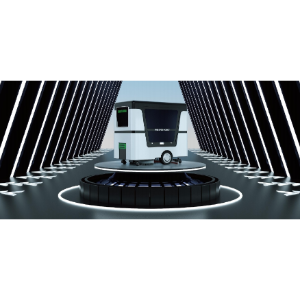
Featured product
Multifunctional robot floor scrubber
In today's era of rapid technological advancement, the cleaning industry has also witnessed innovative changes. The HMTD700S multi-functional robot floor scrubber, with its outstanding performance and cutting-edge innovative technology, has become a shining star in the cleaning field. The HMTD700S multi-functional...
Products mentioned in this guide
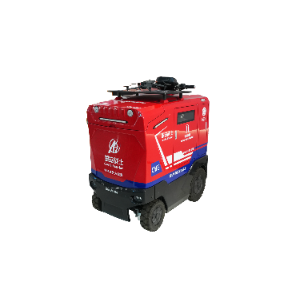
GuoAn Warrior
"The product is equipped with a high-mobility compressed air foam fire extinguishing system, capable of rapidly extinguishing various types of fires, including those in...
View product details →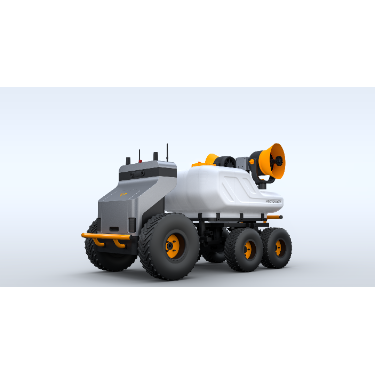
VH300Unmanned Ground Vehicle EV
VH300 combines high-precision, efficient spraying with high-payload transport capability, making it a professional multi-purpose unmanned vehicle designed for agricultural...
View product details →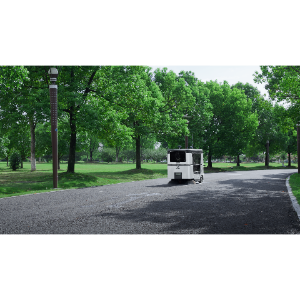
Multi-function Intelligent Robot Sweeper
The HM300 multi-functional intelligent robot sweeper independently developed by Jiangsu Huimin Traffic Equipment Co., Ltd. has become a shining star in the cleaning field with its...
View product details →Frequently asked questions
What is an unmanned vehicle in the B2B context?
An unmanned vehicle is a ground platform that performs a task with a defined level of autonomy. In this category, examples include the HMTD700S indoor floor scrubber, the HM300 outdoor robot sweeper, the VH300 agricultural spraying and transport vehicle, and the GuoAn Warrior firefighting vehicle. Each is designed for a distinct mission, so the category should be evaluated by task fit rather than by a single specification.
Can the HMTD700S robot floor scrubber be used outdoors?
The HMTD700S is described as a multifunctional robot floor scrubber for cleaning indoor-style environments, using laser SLAM, IMU, ultrasonic waves, and depth cameras for perception. The listing does not state outdoor capability. For outdoor road cleaning, the HM300 from the same manufacturer is the purpose-built option. Contact us for the datasheet if your use case spans both environments.
What does L4-level autonomy mean for these vehicles?
Both Jiangsu Huimin platforms — the HMTD700S and the HM300 — describe L4-level highly autonomous driving built on a self-developed intelligent driving computing platform, intelligent control decision-making, and an independently controllable software architecture. In practical terms, this means the vehicles are designed to complete their driving operations autonomously with automatic obstacle avoidance. The exact operating envelope and any limitations are not quantified in the listings; contact us for the datasheet.
Do the VH300 and GuoAn Warrior publish full specifications?
The VH300 listing describes high-precision, efficient spraying combined with high-payload transport for orchards and greenhouses, and the GuoAn Warrior listing states horizontal range exceeding 15 meters, vertical range exceeding 10 meters, high discharge intensity, and a compact electrically powered design. Detailed figures such as payload capacity, battery endurance, and autonomy architecture are not included in these listings — contact us for the datasheet.
How should procurement teams structure an unmanned vehicle purchase?
Start with a mission definition document covering environment, routes, and frequency. Then obtain full datasheets for every unpublished specification, complete a site survey including charging and water infrastructure and GNSS availability, run a defined pilot with measurable outcomes, and confirm service, spare-parts, and software update terms in writing. Finally, review local autonomous-vehicle regulations for your deployment country — particularly relevant for Southeast Asian public-space operations.
Need help selecting the right system?
Tell us your mission, payload, and operating environment. Our team will help you compare options and request the right datasheets from verified suppliers.