Unmanned Vehicle specifications explained in plain terms: when procurement teams evaluate an unmanned vehicle for maritime and port operations, the numbers that matter fall into two groups. On the ground segment, they are mobility (autonomous navigation, obstacle avoidance, all-terrain capability) and power autonomy (battery capacity, charging behavior). On the air segment, they are protection rating, deployment time, endurance, and operating radius. This article uses the New AirSafety Z5, an unmanned integrated patrol platform, to show what each of these specifications means in practice, how it affects mission fit at ports and coastal facilities, and what buyers should ask suppliers before committing.
What an unmanned vehicle specification actually covers
The category "Unmanned Vehicle" covers more than ground robots. In industrial procurement it spans unmanned ground vehicles (UGVs), and increasingly integrated systems where a ground carrier and an aerial carrier operate as one platform. The Z5 is an example of the latter: it is described as an unmanned collaborative operation solution featuring "air-ground integration and intelligent linkage", in which a customized unmanned vehicle carries and powers a DJI Airport dock, and the dock operates Matrice 4D/4TD drones automatically.
This matters for specification review because a single-system datasheet hides two different engineering problems. A ground vehicle that navigates well but cannot power the dock is incomplete; a dock that deploys quickly but sits on a vehicle that cannot reach the patrol area is equally incomplete. Buyers should therefore request specifications for both segments and for the linkage between them. For the Z5, the product page lists the core configuration, but detailed figures beyond those published should be requested directly from the supplier — contact us for the datasheet.
Ground segment specifications: mobility and power
The Z5's ground carrier is a customized unmanned vehicle — new energy pickup trucks or all-terrain off-road vehicles, modified for airport installation and signal linkage. Three specifications here have direct operational consequences:
- Autonomous navigation and automatic obstacle avoidance: these determine how much operator supervision each patrol run needs. In a port environment with container stacks, mooring equipment, and vehicle traffic, obstacle avoidance behavior is not a convenience feature; it defines whether the vehicle can run repeatable routes safely.
- All-terrain driving capability: ports, breakwaters, and coastal perimeters are not uniform paved surfaces. A vehicle rated for all-terrain driving can follow the perimeter rather than being limited to internal roads.
- Large-capacity battery packs with charging while driving: this is the specification that most directly affects mission endurance at the system level. Because the vehicle provides mobile power supply for the DJI Airport, the platform can operate in outdoor power-free scenarios — relevant for remote quays, breakwaters, or newly developed port zones without fixed infrastructure.
When comparing suppliers, ask what the battery pack capacity is, how many dock charge cycles it supports per vehicle charge, and whether charging while driving is sustained or limited. These figures are not published in the summary data, so contact us for the datasheet.
Air segment specifications: the dock and drone
The Z5's low-altitude carrier is DJI Airport 3 (supporting vehicle-mounted mobile deployment) or DJI Airport 2, paired with Matrice 4D/4TD drones. The published specifications are:
- Automatic takeoff and landing with intelligent charging: the drone returns to the dock, recharges, and is ready for the next task without an operator on site. For patrol missions that run on a schedule, this reduces the staffing burden per sortie.
- Deployment in 3 minutes: a vehicle-mounted dock that reaches a position and launches within three minutes changes the response profile for incident checks — a report from a gate or berth can trigger an aerial look in the time a patrol crew is still mustering.
- IP56 protection level: dust and water ingress protection at this level is what allows the dock-drone combination to operate through the dust, spray, and washdown conditions typical of maritime environments. Buyers should confirm with the supplier how IP56 was tested and over what exposure duration.
- Operation in extreme temperatures and strong winds: the data states adaptability to harsh environments including strong winds, but does not publish a wind-speed limit or temperature range. For coastal procurement, request the actual operating envelope — contact us for the datasheet.
- Endurance up to 47 minutes and operation radius of 25 kilometers: these two figures together define the coverage per sortie. A 25 km radius from a vehicle-staged position means a single vehicle placement can cover a large port perimeter or coastal strip, with the 47-minute endurance setting how much of that area can be inspected per flight.
How these specifications map to maritime and port missions
For port and maritime buyers, the specification-to-mission fit looks like this. Perimeter and berth patrol benefits most from the combination of all-terrain ground mobility, a 3-minute deployment, and automatic takeoff and landing: the vehicle drives the route, the drone handles the aerial view on demand. Infrastructure and asset checks over a wide area draw on the 25 km operation radius, since the vehicle can reposition between sectors and the drone covers each from the air. Operations in power-free or infrastructure-poor zones — common in port expansion areas and along coastal approaches in North Africa, where grid coverage at new terminals can lag construction — depend on the vehicle's battery packs and charging-while-driving capability.
The Z5's stated purpose is helping industries move from "human-led" to "intelligence-led" operations through an operating system that links the ground and air carriers. Procurement teams should treat that linkage itself as a specification: ask how the scheduling works, what happens when the link between vehicle and dock is interrupted, and how missions are dispatched and logged. The supplied data describes collaborative scheduling but does not detail the software interfaces, so contact us for the datasheet.
Questions to ask suppliers before specifying
A specification explainer is only useful if it converts into procurement questions. For an integrated air-ground platform like this one, the essential questions are:
- Which DJI Airport model is included, and what are the differences in vehicle-mounted deployment between Airport 3 and Airport 2 for our site layout?
- What is the vehicle's battery pack capacity, and how many drone charge cycles does one vehicle charge support in the field?
- What are the tested wind-speed and temperature limits behind the "extreme temperatures and strong winds" claim?
- How is the IP56 rating validated for the dock and drone in a saline, high-humidity maritime environment?
- What does the collaborative scheduling system include — dispatch, mission logging, and remote monitoring — and what are its integration requirements?
Comparing unmanned vehicle options in the category
The Unmanned Vehicle category also includes single-purpose ground platforms, and fixed-wing VTOL UAVs sit nearby in the drone category. The table below compares the published characteristics relevant to a maritime buyer choosing between an integrated patrol platform and alternatives.
| Attribute | Z5 integrated patrol platform | VH300 unmanned ground vehicle | VF25E / VF180P VTOL fixed-wing UAVs |
|---|---|---|---|
| Architecture | Ground vehicle + DJI Airport dock + Matrice 4D/4TD drones, air-ground integration | Ground vehicle only | Aerial only, composite-wing VTOL |
| Primary use case in data | Collaborative patrol and multi-industry intelligent operations | Agricultural spraying and payload transport in orchards and greenhouses | Long-endurance aerial survey and inspection |
| Published endurance | Up to 47 minutes (drone) | Not stated — contact us for the datasheet | Long endurance stated; figures not published — contact us for the datasheet |
| Environment rating | IP56; extreme temperatures and strong winds | Not stated | Complex terrain including mountains, hills, jungles |
| Power autonomy | Large-capacity battery packs, charging while driving, power-free outdoor operation | Not stated | Not stated |
The comparison illustrates a procurement principle: match the architecture to the mission. A dedicated agricultural UGV like the VH300 is optimized for spraying and transport, not perimeter patrol. A VTOL fixed-wing UAV covers long distances efficiently but does not provide the ground mobility, mobile power, or dock-based automatic turnaround that a patrol platform does. For port security and recurring patrol work, the integrated architecture of the Z5 is the closer fit; for wide-area mapping or corridor survey missions, the fixed-wing platforms from Shenzhen Flamingo Aviation Technology are the more appropriate category.
Reading the datasheet with maritime conditions in mind
Finally, when the full datasheet arrives, review it against the realities of your site rather than the headline numbers. A 25 km operation radius is measured from the dock's position — with a vehicle-mounted dock, that position moves, so calculate coverage per vehicle placement, not per fixed installation. A 47-minute endurance figure is a maximum; patrol routes with hover time, wind, and return margins will yield less. IP56 protects against dust and water ingress but is not a statement about corrosion in saline air, so ask what materials and coatings are used. And because the Z5 depends on the link between vehicle, dock, and scheduling system, ask the supplier what happens at the edge of communication coverage along your perimeter. These are the questions that turn a specification sheet into a deployment plan.
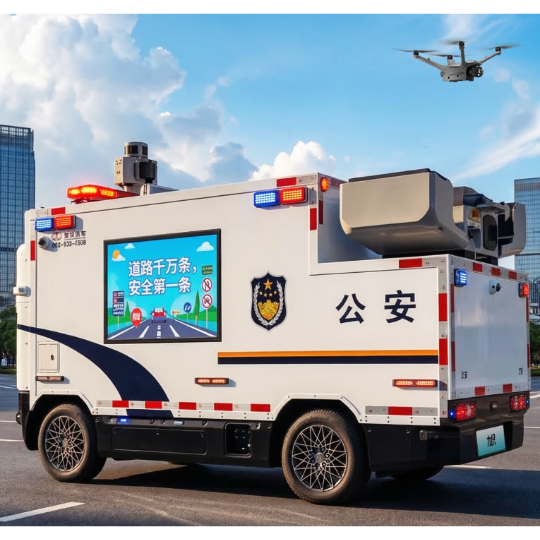
Featured product
Unmanned integrated patrol platform
This product is an unmanned collaborative operation solution featuring "air-ground integration and intelligent linkage". It utilizes an operating system to integrate the ground-based mobile advantages of unmanned vehicles with the automated low-altitude operation capabilities of DJI airports, breaking the limitations...
Products mentioned in this guide
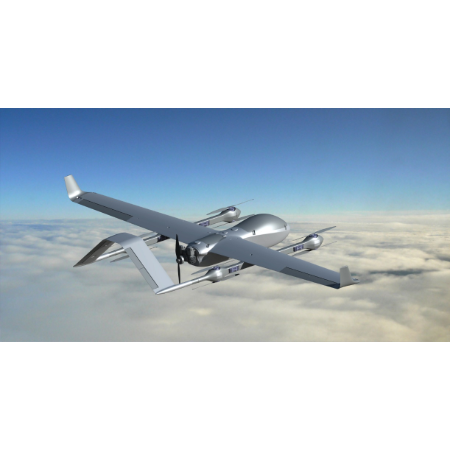
VF180P/Oil powered vertical takeoff and landing fixed-wing UAV
The VF180P unmanned aerial vehicle platform is an electric long endurance composite wing vertical takeoff and landing unmanned aerial vehicle independently developed by our...
View product details →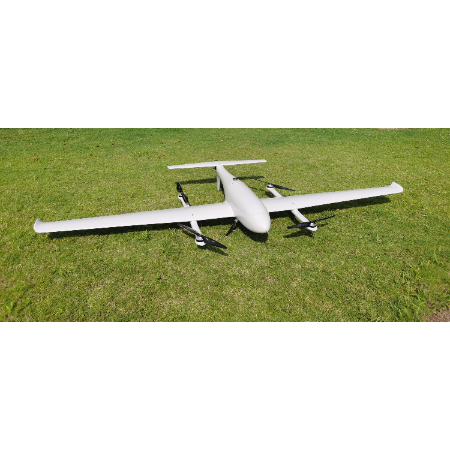
VF25E/Electric vertical takeoff and landing fixed-wing UAV
1. Performance characteristics The VF25E unmanned aerial vehicle platform is an electric long endurance composite wing vertical takeoff and landing unmanned aerial vehicle...
View product details →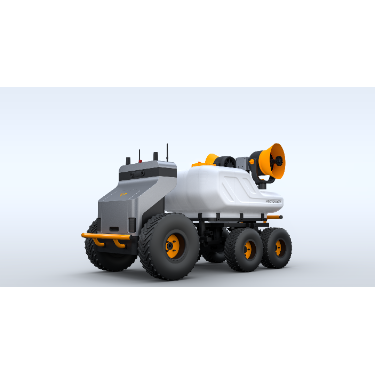
VH300Unmanned Ground Vehicle EV
VH300 combines high-precision, efficient spraying with high-payload transport capability, making it a professional multi-purpose unmanned vehicle designed for agricultural...
View product details →Frequently asked questions
What is the difference between DJI Airport 3 and DJI Airport 2 in the Z5 platform?
The product data states that DJI Airport 3 is preferred and supports vehicle-mounted mobile deployment, while DJI Airport 2 is the alternative option. The data does not detail the differences between the two docks, so contact us for the datasheet.
Can the Z5 operate at a port site without fixed power infrastructure?
Yes, according to the product data. The unmanned vehicle carries large-capacity battery packs that provide mobile power supply for the DJI Airport, supports charging while driving, and is described as adapting to outdoor power-free scenarios.
How far and how long can the drone fly on the Z5 platform?
The published figures are an endurance of up to 47 minutes and an operation radius extending to 25 kilometers for the Matrice 4D/4TD drones. Real-world patrol coverage will depend on route, wind, and reserve margins.
Is the Z5 suitable for harsh coastal weather conditions?
The product data states that the drones feature an IP56 protection level and can operate stably in extreme temperatures and strong winds. Specific wind-speed and temperature limits are not published, so contact us for the datasheet.
Does the Z5 require an operator to launch and recover the drone?
The data describes automatic takeoff and landing, intelligent charging, and quick deployment in 3 minutes, indicating automated dock operation. The exact level of human oversight required for dispatch and monitoring is not detailed in the summary data, so contact us for the datasheet.
Need help selecting the right system?
Tell us your mission, payload, and operating environment. Our team will help you compare options and request the right datasheets from verified suppliers.