The ZDT-MN760 MEMS Integrated Navigation System is a compact navigation unit for UAVs and other carriers that measures attitude, heading, speed, and position by fusing inertial sensors with satellite positioning and magnetic compass data. For public safety and emergency response teams in North America running drones for search and rescue, incident mapping, or disaster assessment, it addresses a familiar procurement problem: how to get reliable navigation output from a small, power-efficient unit when satellite reception, vibration, or flight conditions are less than ideal. This spotlight explains what the ZDT-MN760 is, who it fits, which operational problems it targets, and what procurement teams should verify before committing budget.
What the ZDT-MN760 Is
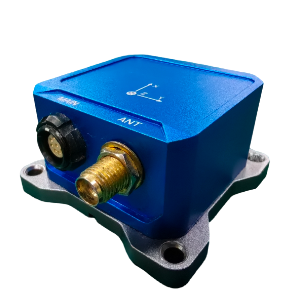
The ZDT-MN760 MEMS Integrated Navigation System, manufactured by Beijing Zhongke Daokong Technology Co., Ltd., is a combined navigation system with an integrated satellite receiver module. Internally, it integrates multiple sensor types: gyroscopes, accelerometers, a magnetic compass, temperature sensors, a barometer, and GNSS. The manufacturer describes it as small in size with high precision, built around a high-performance, small-sized MCU with adaptive wide power input.
The processing approach is the core of the product. The ZDT-MN760 runs an enhanced extended Kalman filter that fuses inertial data with GNSS and magnetic compass information. The stated goal of that fusion is to provide consistent attitude and navigation data even in challenging environments — a requirement that maps directly onto emergency response flying, where signal conditions and platform dynamics are rarely clean.
Who This Product Is For
The ZDT-MN760 is aimed at B2B integrators and fleet operators rather than consumer buyers. In a public safety and emergency response context, the natural audiences are:
- UAV integrators building or retrofitting airframes for police, fire, and emergency management agencies who need a compact navigation module rather than a full avionics stack.
- Procurement teams at public safety agencies specifying navigation components for drones used in search and rescue, damage assessment, or incident documentation.
- Enterprise drone service providers in North America that support government contracts and need navigation hardware whose sensor suite they can document in bids and technical proposals.
- Engineering teams that already work with MEMS-class inertial systems and want a unit that can accept external aiding inputs such as odometer data.
Because the product is a component rather than a complete aircraft, the buying decision usually sits with the technical integrator, not the end agency. That distinction shapes what buyers should verify, which we cover below.
Operational Problems It Addresses
Emergency response operations put specific pressures on navigation hardware. The ZDT-MN760's design choices respond to several of them:
- Degraded or inconsistent satellite reception. The unit integrates its own GNSS receiver but does not rely on it alone; the Kalman filter fuses inertial, GNSS, and magnetic compass data, so navigation output does not hinge on a single sensor source.
- Attitude determination in dynamic flight. Gyroscopes and accelerometers provide the inertial backbone for attitude and heading output, which matters when drones maneuver aggressively around structures or terrain during search patterns.
- Size and power constraints on small platforms. The manufacturer emphasizes small size and a small-sized MCU with adaptive wide power input, which supports integration onto compact UAV platforms where payload budget is tight.
- Integration with ground vehicles or hybrid systems. The ability to accept external odometer aiding information extends the unit beyond pure airborne use, which is relevant for teams operating mixed unmanned fleets in disaster response.
- Temperature variation in the field. Onboard temperature sensors are part of the sensor suite, supporting the filter's ability to maintain navigation output across changing conditions.
How It Compares Within the Manufacturer's Range
Buyers evaluating the ZDT-MN760 should understand where it sits relative to the same brand's higher-tier offering, the ZDT-FD630B Fiber Optic Integrated Navigation System. The two products serve different performance tiers, and the table below uses only attributes stated in the available product data.
| Attribute | ZDT-MN760 | ZDT-FD630B |
|---|---|---|
| Sensing technology | MEMS gyroscopes and accelerometers | High-performance optical fiber gyroscopes and quartz flexible accelerometers |
| Satellite reception | Integrated satellite receiver module with GNSS | Built-in receiver supporting four satellite positioning systems; can operate independently with Beidou |
| Differential positioning | Not stated in available data — contact us for the datasheet | Supports RTK differential positioning for centimeter-level accuracy |
| External sensor expansion | Accepts external odometer aiding information | Supports expansion of external sensors such as odometers and DVLs |
| Factory calibration | Not stated in available data — contact us for the datasheet | Sensors precisely calibrated at the factory with full-range temperature compensation |
| Satellite signal loss behavior | Fuses inertial, GNSS, and magnetic compass data via enhanced extended Kalman filter | Maintains good navigation data output for an extended period after satellite signal loss |
| Positioning | Small size, high precision | Highly accurate, lightweight, stable; wide-temperature and high-vibration operation |
The practical takeaway: the ZDT-MN760 is the MEMS-tier option for teams prioritizing compactness and multi-sensor fusion, while the ZDT-FD630B is the fiber optic tier for missions where centimeter-level RTK positioning, extended dead-reckoning after signal loss, or operation in high-vibration environments are explicit requirements. Quantitative accuracy figures for the ZDT-MN760 are not included in the available data — contact us for the datasheet.
What Buyers Should Verify Before Purchasing
Because the ZDT-MN760 is an integration component, a specification sheet alone is not enough for a public safety procurement decision. Before purchase, technical teams should confirm:
- Interface compatibility. Confirm the electrical and data interfaces against your flight controller or autopilot. The available data describes the MCU and sensor suite but does not list connector types or output protocols — contact us for the datasheet.
- Power requirements in detail. The unit has adaptive wide power input, but your integration team should confirm the exact voltage range and consumption against your platform's power budget.
- Accuracy and bias specifications. 'High precision' is the manufacturer's characterization; request the numeric attitude, heading, and position accuracy figures for your acceptance criteria.
- Environmental ratings. Public safety missions in North America can span temperature extremes, rain, and dust. Verify operating temperature range, sealing, and vibration tolerance before fielding.
- Regulatory fit. Confirm how the navigation unit interacts with your aircraft's compliance posture for the missions you fly, including any agency-specific requirements.
- Odometer aiding integration. If you plan to use the external odometer input, confirm supported odometer types and signal formats with the manufacturer.
Related Products Worth Knowing About
Two other products in the marketplace's catalog are relevant context for teams building out a public safety UAV capability, though neither is required for the ZDT-MN760 to function. The HOT40-200 Cooled Thermal Camera module from Beijing FJR Opto-electronic Technology uses a high-temperature infrared detector with small size, low power consumption, and fast start characteristics, and can be integrated into complete machines and other photoelectric products to provide infrared imagery — a common pairing for night search operations. Separately, the DET G10/L10-DOU Coaxial Tester from Shenzhen Deep Exploration Technology is a dual-motor power system comprehensive tester for characterizing propulsion systems, which some integrators use during airframe development and maintenance programs. Both are optional additions depending on your program scope.
Next Steps for Procurement Teams
If your program requires a compact, multi-sensor navigation module that fuses inertial, GNSS, and magnetic compass data through an enhanced extended Kalman filter, the ZDT-MN760 is a candidate worth shortlisting for public safety and emergency response platforms. Request the datasheet to obtain the numeric specifications, interface details, and environmental ratings your engineering team needs, and evaluate it alongside the ZDT-FD630B if your missions demand fiber optic-grade inertial performance or RTK-level positioning.
Featured product
ZDT-MN760 MEMS Integrated Navigation System
The ZDT-MN760 product is a combined navigation system with an integrated satellite receiver module, designed to measure the attitude, heading, speed, and position of a carrier. It features a small size and high precision. The system internally integrates multiple sensors including gyroscopes, accelerometers, a...
Products mentioned in this guide
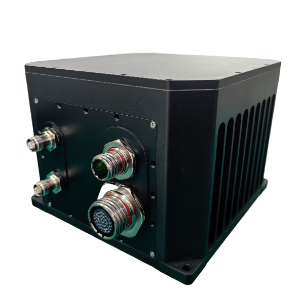
ZDT-FD630B Fiber Optic Integrated Navigation System
The ZDT-FD630B product is an optical fiber integrated navigation system that internally integrates various sensors such as high-performance optical fiber gyroscopes, quartz...
View product details →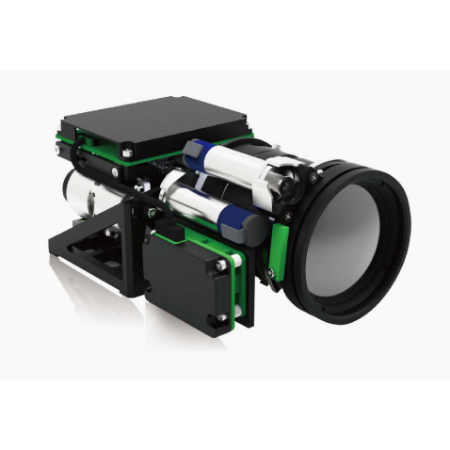
Cooled Thermal Cameras
HOT40-200 cooled thermal module uses a high-temperature infrared detector, its operating temperature is higher than the conventional cooled detector, with small lightweight, low...
View product details →
Coaxial tester
Dual-Motor Power System Comprehensive Tester Dual-power, multi-range, flexible multi-functional customization Inherits the advantages of G10/L10 single-axis test benches ,...
View product details →Frequently asked questions
What sensors are inside the ZDT-MN760?
The ZDT-MN760 internally integrates gyroscopes, accelerometers, a magnetic compass, temperature sensors, a barometer, and GNSS, combined in a single navigation unit with an integrated satellite receiver module.
How does the ZDT-MN760 handle challenging environments?
It runs an enhanced extended Kalman filter that fuses inertial data with GNSS and magnetic compass information. According to the manufacturer, this fusion provides superior attitude and navigation data even in the most challenging environments.
What is the difference between the ZDT-MN760 and the ZDT-FD630B?
The ZDT-MN760 is a MEMS-based system focused on small size and multi-sensor fusion, while the ZDT-FD630B uses high-performance optical fiber gyroscopes and quartz flexible accelerometers, supports RTK differential positioning for centimeter-level accuracy, supports four satellite positioning systems with independent Beidou operation, and can maintain navigation output for an extended period after satellite signal loss.
Can the ZDT-MN760 accept external aiding sensors?
Yes. The product data states it can accept external odometer aiding information. For other sensor types, the ZDT-FD630B supports expansion with external sensors such as odometers and DVLs; contact us for the datasheet to confirm ZDT-MN760 expansion options.
Where can I get detailed specifications such as accuracy figures and interface types?
The available product data describes the sensor suite, processing approach, and general characteristics but does not include numeric accuracy figures, interface protocols, or environmental ratings. Contact us for the datasheet to obtain the full technical specifications.
Need help selecting the right system?
Tell us your mission, payload, and operating environment. Our team will help you compare options and request the right datasheets from verified suppliers.