If you are procuring an unmanned vessel for infrastructure inspection or water-based operations in 2026, start by matching the platform to a clearly defined mission profile, then request datasheets to validate control range, power supply, and payload claims before committing to a supplier. This guide explains the selection criteria that matter for B2B buyers, the trade-offs between rescue-oriented and general-purpose vessels, the integration questions to raise with vendors, and a procurement checklist you can adapt for tenders in East Africa and other regions.
Where unmanned vessels fit in infrastructure inspection programmes
Unmanned surface vessels are typically deployed alongside aerial drones in inspection programmes for ports, bridges, dams, culverts, and coastal assets. A surface platform can carry out close-up visual checks of structures at the waterline, support survey teams on the water, and handle tasks such as towing or equipment transport that aerial vehicles cannot perform safely. For teams that already operate UAVs, adding a water-based platform extends coverage to the interface between structures and the water itself.
Buyers should be clear from the outset that several unmanned vessels on the market, including the examples in this guide, are designed primarily as water rescue equipment rather than as inspection sensor carriers. If your requirement is camera or sensor payload integration, confirm payload capability directly with the supplier; contact us for the datasheet on any model where this is not documented.
The options available: three product types to understand
The unmanned vessel category covers distinct product types. Understanding which type matches your operational scenario is the first selection decision, and it matters more than individual specifications.
- Rescue lifeboats: Compact remote-controlled boats for single-person water rescue, towing, and rescue transport. The Water-based smart lifeboat (XHX-U-02, Shenzhen Xinhongxin Technology) is operated through a simple remote control system and includes one-key return and out-of-control return functions, with customization available for specific rescue tasks.
- High-performance rescue robots: The Water-based smart remote control robot (XHX-KUN-02, Shenzhen Xinhongxin Technology) adds documented performance figures: military-grade lithium iron phosphate battery power, a high-power ducted pump jet propeller, autonomous heading correction, one-key return, 5,000 metres of remote control distance, a 25-metre high-throw rescue capability, single-person carrying for rapid deployment, a maximum traction force of 330 kilograms, and water buoyancy of 1,500N.
- Aerial-delivered rescue buoys: The Flying buoy (KTY-JSQ-Q1 PRO, Nanjing Kaitianyan UAV Technology) is a patented flight lifebuoy with a compact structure, lightweight appearance, and stable flight, intended for quick emergency water rescue. For dimensional and performance data, contact us for the datasheet.
- General-purpose remote-controlled vessels: The Intelligent remote-controlled unmanned vessel (R5000, Zhejiang Starobots Power Technology) is listed as an intelligent remote-controlled unmanned vessel. Detailed specifications are not included in the available data; contact us for the datasheet.
Selection criteria for B2B buyers
Evaluate candidate vessels against the following criteria. Where a supplier does not publish a figure, treat it as a procurement question rather than assuming the capability.
Control and autonomy
Documented safety functions such as one-key return and out-of-control return, as offered on the XHX-U-02, reduce the risk of losing the platform during an operation or training exercise. The XHX-KUN-02 also lists autonomous heading correction, which matters when operating in current or wind. Ask every supplier which of these functions are standard and which require configuration.
Control range and power supply
The 5,000-metre remote control distance documented for the XHX-KUN-02 illustrates why range figures should be verified in writing; two vessels of similar size can differ substantially in usable operating distance. Battery chemistry also affects fleet operations: the XHX-KUN-02 uses military-grade lithium iron phosphate, a chemistry buyers typically favour for thermal stability and cycle life. For the XHX-U-02, R5000, and KTY-JSQ-Q1 PRO, contact us for the datasheet before comparing on these attributes.
Deployment logistics
For inspection teams that move between sites, portability is a real constraint. The XHX-KUN-02 is documented as capable of single-person carrying for rapid deployment, which suits crews working without a dedicated vessel trailer or dock. Larger or heavier platforms may require vehicle-mounted transport; confirm weight and dimensions with each supplier.
Load capability and task fit
Match the platform's rated load to the task: the XHX-KUN-02 documents a maximum traction force of 330 kilograms and water buoyancy of 1,500N for multi-scene application, figures that are relevant if towing equipment or persons is part of the mission. If your programme is strictly inspection-focused and does not involve rescue or towing, a general-purpose remote-controlled vessel such as the R5000 may be sufficient, subject to datasheet review.
Trade-offs to weigh before specifying
Every procurement in this category involves trade-offs. The following are the most common ones B2B buyers face.
- Specialization versus flexibility: A dedicated rescue device such as the XHX-U-02, described as a standard rescue device for government emergency and civil water rescue organizations, is purpose-built but may limit secondary uses. General-purpose platforms may offer broader utility but fewer documented rescue-specific functions.
- Documented performance versus vendor descriptions: Only one model in this comparison publishes specific figures in the available data. Where performance is not documented, the trade-off is procurement risk versus the convenience of skipping the datasheet process.
- Portability versus capability: Single-person deployable platforms trade some payload and endurance for faster setup, which suits distributed inspection sites and short water crossings.
- Standard configuration versus customization: The XHX-U-02 supports systematic function customization for specific rescue tasks. Customization can improve mission fit but typically extends lead times and affects support arrangements; confirm both with the supplier.
Integration questions to raise with suppliers
Before purchase, put these questions in writing to each vendor. The answers will often differentiate suppliers more than headline specifications.
- Which safety functions (one-key return, out-of-control return, autonomous heading correction) are standard, and what happens when the radio link is lost?
- What are the exact control range, battery type, runtime, and charging requirements for each model under consideration?
- Is payload mounting or customization available for inspection cameras or sensors, and is this a factory option or a third-party modification?
- What operator training, spares availability, and warranty terms are offered, particularly for deployments in East Africa where local service coverage may vary?
- How does the vessel integrate with existing drone or survey workflows, including data handling if onboard cameras are fitted?
Procurement checklist for unmanned vessels
Use this checklist to structure tender documents and supplier evaluations. It is deliberately specification-driven so that responses can be compared like for like.
- Define the mission profile in writing: rescue support, towing, transport, or inspection support, and the water conditions expected on site.
- Request full datasheets for every shortlisted model, including the XHX-U-02, R5000, XHX-KUN-02, and KTY-JSQ-Q1 PRO where figures are not published.
- Confirm control range, battery chemistry, runtime, and charging infrastructure requirements against your operating area.
- Verify load ratings (traction force, buoyancy) against the heaviest documented task, not an average task.
- Confirm deployment method: single-person carry, two-person lift, or vehicle transport, and whether a dock or launch site is required.
- Document customization needs early if mission-specific functions are required, as with the XHX-U-02.
- Agree training, spares, warranty, and support terms in the contract, including response times for regional deployments.
- Plan a supervised acceptance test covering control functions, return functions, and any payload integration before final payment.
For teams building an integrated inspection capability, the practical route is to pair an aerial UAV fleet with a water-based platform selected from the types above, request datasheets for the shortlisted models, and score each supplier against the checklist. Where published data is unavailable for a specific attribute, contact us for the datasheet rather than relying on verbal claims.
| Attribute | XHX-U-02 | XHX-KUN-02 | R5000 | KTY-JSQ-Q1 PRO |
|---|---|---|---|---|
| Brand | Shenzhen Xinhongxin Technology | Shenzhen Xinhongxin Technology | Zhejiang Starobots Power Technology | Nanjing Kaitianyan UAV Technology |
| Primary documented use | Single-person water rescue, towing, rescue transport | Multi-scene water rescue application | Intelligent remote-controlled vessel (as listed) | Quick emergency water rescue |
| Documented control functions | One-key return, out-of-control return | One-key return, autonomous heading correction, 5,000 m control distance | Not documented in available data | Not documented in available data |
| Documented power/load figures | Contact us for the datasheet | LiFePO4 battery, ducted pump jet, 330 kg max traction, 1,500N buoyancy | Contact us for the datasheet | Contact us for the datasheet |
| Customization | Systematic function customization for specific rescue tasks | Not documented in available data | Contact us for the datasheet | Contact us for the datasheet |
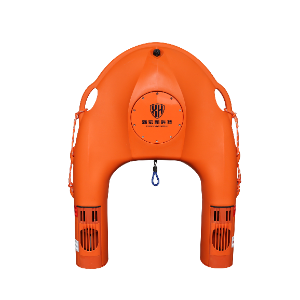
Featured product
Water-based smart lifeboat
The water-based intelligent rescue boat is mainly used in single-person water rescue, towing, and rescue transportation. The product operates the boat through a simple remote control of the ship control system and has one-key return, out-of-control return and other functions. It is a standard rescue device government...
Products mentioned in this guide
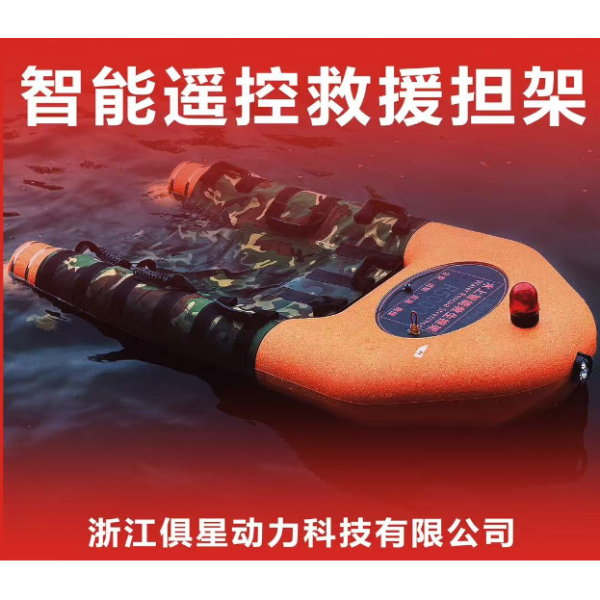
Intelligent remote-controlled unmanned vessel
Intelligent remote-controlled unmanned vessel
View product details →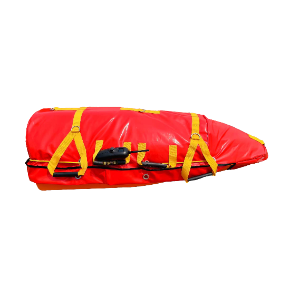
Water-based smart remote control robot
The water-based intelligent remote control robot adopts military-grade lithium iron phosphate battery power supply, uses high-power ducted pump jet propeller, can autonomous...
View product details →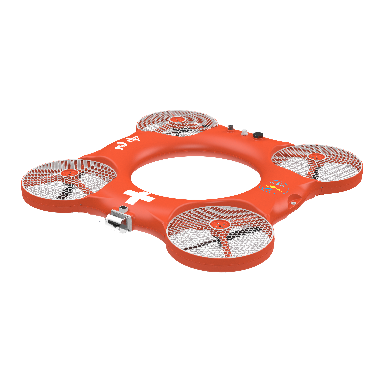
Flying buoy
The flight lifebuoy is the patented product of Kaitianyan for quick emergency rescue on water thanks to its compact structure, lightweight appearance, stable flight and reliable...
View product details →Frequently asked questions
What is an unmanned vessel used for in B2B operations?
In the examples covered here, unmanned vessels are used for single-person water rescue, towing, rescue transportation, and general remote-controlled water operations. They can also support infrastructure inspection programmes that cover structures at the waterline, such as ports, bridges, and dams. Payload capabilities for sensor or camera integration should be confirmed with the supplier.
Which unmanned vessel model has published performance specifications?
The Water-based smart remote control robot (XHX-KUN-02) documents a 5,000-metre remote control distance, military-grade lithium iron phosphate battery power, a high-power ducted pump jet propeller, autonomous heading correction, a 25-metre high-throw rescue capability, single-person carrying, a maximum traction force of 330 kilograms, and water buoyancy of 1,500N. For the XHX-U-02, R5000, and KTY-JSQ-Q1 PRO, contact us for the datasheet.
Can the XHX-U-02 be customized for specific rescue tasks?
Yes. The product description states that the water-based intelligent rescue boat is a standard rescue device for government emergency and various civil water rescue organizations, and can meet the systematic function customization of users in specific rescue tasks. Customization scope, lead time, and cost should be confirmed with the supplier before ordering.
Is a flying buoy suitable instead of a boat-based platform?
The Flying buoy (KTY-JSQ-Q1 PRO) is a patented flight lifebuoy designed for quick emergency water rescue, with a compact structure, lightweight appearance, stable flight, and reliable performance as described by the manufacturer. It addresses rapid rescue delivery rather than towing or transport. Whether it replaces a boat-based platform depends on your mission profile; contact us for the datasheet to compare its specifications.
What should East African buyers check before contracting an unmanned vessel supplier?
Confirm datasheet-backed specifications for control range, power supply, and load ratings; clarify which safety functions are standard; and agree in the contract on operator training, spares availability, warranty terms, and support response times for your deployment region. Local service coverage should be verified with the supplier before purchase, particularly for teams operating away from major service centres.
Need help selecting the right system?
Tell us your mission, payload, and operating environment. Our team will help you compare options and request the right datasheets from verified suppliers.