Most sensor questions from surveying and mapping procurement teams reduce to three issues: whether the device speaks the protocol your autopilot uses, whether it survives the environment you actually fly in, and whether the supplier can hand you documentation you can file and audit. This FAQ answers those questions in the order they typically arise, using the SKYE 2 Airspeed Sensor from CUAV Tech Inc., Ltd. as a worked example of how to read a sensor datasheet critically.
What Does an Airspeed Sensor Contribute to a Surveying Mission?
An airspeed sensor measures the pressure difference between moving air and static air, typically through a pitot tube, and reports airspeed to the flight controller. On fixed-wing and hybrid VTOL mapping platforms, that reading feeds the control loops that hold the aircraft stable on long flight lines. Because air density changes with temperature and humidity, a sensor that compensates for both tends to produce more consistent readings across the day. The SKYE 2 Airspeed Sensor integrates a pitot tube, an airspeed sensor, a temperature and humidity sensor, and a dual temperature compensation system in a single unit, which means the compensation is handled inside the device rather than in your post-processing.
The SKYE 2 Airspeed Sensor is described by the manufacturer as an intelligent airspeed meter with de-icing and drainage functionality, built around an ARM M4 processor. For a procurement file, the relevant point is not the marketing language but the functional list: heating strategy, drainage hole, temperature compensation, vibration resistance, and a DroneCAN interface. Each of those maps to a question you should ask before signing a purchase order.
Which Sensors Does a Surveying UAV Payload Stack Actually Need?
Surveying and mapping aircraft usually carry several distinct sensor families, and they are rarely purchased from a single vendor. Separating them at the requisition stage avoids compatibility surprises later.
- Airspeed and environmental sensing: pitot-based airspeed with temperature and humidity compensation, as in the SKYE 2.
- GNSS anti-jamming: for example the PM320 Dual-Channel Anti-jamming System, an ultra-miniaturized two-channel unit supporting B1/B3 dual-frequency reception, or the TX-009-8CH-BD-WG-DT dual-band eight-channel terminal for BeiDou and GPS L1 reception.
- Communication and compute: for example the Yunshu HY-300 terminal, which integrates 5G and 1.4G communication modules and offers interfaces for external devices.
- Positioning and navigation: GNSS/INS units, which are a separate category and should be specified against your accuracy and environment requirements.
How Do You Confirm Integration and Autopilot Compatibility?
Compatibility is decided by protocol, physical mounting, and firmware version. The SKYE 2 uses the DroneCAN protocol and supports open-source platforms such as ArduPilot, according to the product data. That statement answers the first question but not the next two: you still need the connector pinout, the mounting dimensions, and confirmation that the specific ArduPilot release used by your fleet recognises the device. Ask for those in writing before you compare quotations, because a cheaper sensor that requires a firmware fork is not cheaper once engineering time is counted.
| Attribute | SKYE 2 Airspeed Sensor (published data) | Verify before ordering |
|---|---|---|
| Sensing elements | Pitot tube, airspeed sensor, temperature and humidity sensor, dual temperature compensation | Calibration record and compensation method |
| Processor | ARM M4 | Firmware update path and version support |
| Icing and water handling | M4C intelligent heating strategy; drainage hole designed to melt ice and drain water | Operating envelope and power draw: contact us for the datasheet |
| Protocol | DroneCAN; supports open-source platforms such as ArduPilot | Autopilot firmware version compatibility |
| Housing | Linear structure design intended to reduce wind resistance | Mounting dimensions and integration drawings: contact us for the datasheet |
| Price and lead time | Not published in the product data | Quotation, warranty terms, and delivery schedule |
Will Sensors Survive Heat, Humidity, Rain, and Fog in Southeast Asia?
This is the question that most often separates a desk evaluation from a field one. In maritime Southeast Asia, mapping crews work through high humidity, sudden rain, and coastal fog, and the failure mode is usually water or ice in the pressure path rather than electronics. The SKYE 2 addresses that directly with a drainage hole and an intelligent heating strategy that the manufacturer states melts ice and drains water to avoid data error. The product data also cites low temperature drift, high vibration resistance, and high precision, and positions the sensor for cold, fog, and rain conditions.
What the product data does not state is an ingress rating, an operating temperature range, or a power consumption figure. Those are the numbers your engineering team needs for a tropical deployment, so request them explicitly: contact us for the datasheet. A supplier that cannot provide an operating envelope in writing should not be on a shortlist for a fleet rollout.
How Should Procurement Teams Evaluate Sensor Suppliers?
Score suppliers on evidence rather than adjectives. A practical framework for a surveying sensor purchase looks like this:
- Traceable specifications: a datasheet that lists each sensing element, interface, and environmental limit, with no gaps glossed over.
- Integration support: protocol documentation and a named technical contact who can answer firmware questions.
- Calibration and service: how the unit is calibrated, how often, and whether recalibration is available in your region.
- Lifecycle commitment: firmware maintenance, spare parts availability, and the expected production lifespan of the model.
- Commercial clarity: price, lead time, warranty, and Incoterms stated in the quotation rather than discussed verbally.
What Documentation and Support Terms Should Be in the Contract?
For sensors, the paperwork is part of the product. Ask for the datasheet, the DroneCAN protocol description, the calibration certificate, and the firmware release notes as deliverables, and tie payment milestones to their receipt where your organisation permits it. On compliance, certification requirements vary by destination and by operator; ask the supplier which certifications apply to your jurisdiction, and do not assume a claim exists because a listing is silent. Where documentation for the SKYE 2 Airspeed Sensor is not published in the product data, contact us for the datasheet.
Finally, decide who owns integration. If your avionics team will wire and configure the sensor, confirm that the supplier's support covers configuration questions rather than only hardware faults. If the supplier or an integrator will do the work, put the acceptance criteria in the statement of work: sensor detected on the bus, readings compared against a reference, and a documented pass or fail. That single clause removes most of the ambiguity from a sensor purchase, whether you are equipping one mapping aircraft or a regional fleet.
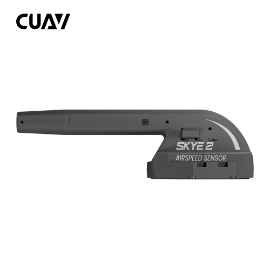
Featured product
SKYE 2 Airspeed Sensor
The industry's first intelligent airspeed meter with de-icing and drainage functionalities. It integrates an ARM M4 processor, pitot tube, airspeed sensor, temperature and humidity sensor, and dual temperature compensation system. SKYE 2 features a new generation of M4C intelligent heating strategy and a drainage...
Products mentioned in this guide
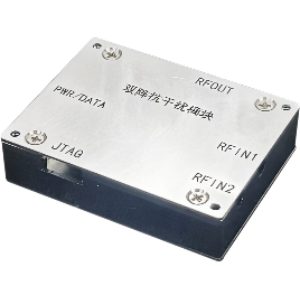
PM320 Dual-Channel Anti-jamming System
"n ultra-miniaturized 2-channel satellite navigation anti-jamming system designed for small/micro unmanned platforms. It integrates RF components, anti-jamming modules, and a...
View product details →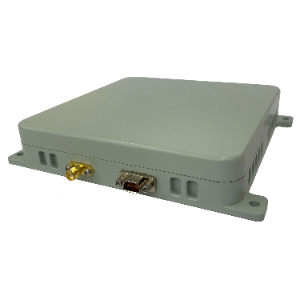
Dual frequency eight channel anti-interference terminal
This product model is TX-009-8CH-BD-WG-DT: dual-band 8-channel anti-jamming, it is a miniaturized satellite navigation anti-jamming integrated device designed for civilian drones...
View product details →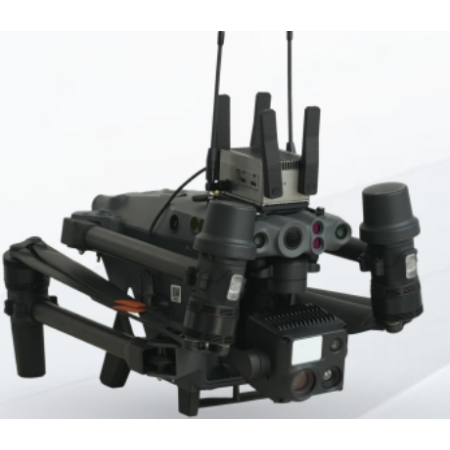
The Drone Remote Communication & Control Terminal
The Drone Remote Communication & Control Terminal - Yunshu HY-300 is a communication, control, and computing platform designed to work with a remote-control joystick, forming a...
View product details →Frequently asked questions
Is the SKYE 2 Airspeed Sensor compatible with ArduPilot?
Yes, according to the product data. The SKYE 2 uses the DroneCAN protocol, which the manufacturer states supports open-source platforms such as ArduPilot. Confirm the specific ArduPilot release your fleet runs before ordering, and request the protocol documentation.
Does the sensor work in rain and fog?
The manufacturer describes the SKYE 2 as designed for cold, fog, and rain conditions, with a new-generation M4C intelligent heating strategy and a drainage hole that melt ice and drain water to avoid data error. The published data does not include an ingress rating or operating temperature range, so contact us for the datasheet to confirm suitability for your site conditions.
Can one airspeed sensor serve both fixed-wing and multi-rotor platforms?
The manufacturer states the sensor is suitable for various unmanned systems models. Airspeed measurement is most directly relevant to fixed-wing and hybrid VTOL aircraft, so confirm the intended use with the supplier before specifying it for a multi-rotor fleet.
What should we request before issuing a purchase order?
Request the datasheet, the connector pinout and mounting dimensions, the DroneCAN protocol documentation, the calibration record, the firmware update path, and a written quotation covering price, lead time, warranty, and Incoterms. Where a figure is missing from the published data, ask for it in writing rather than relying on a verbal statement.
Does SkyDrone Max list other sensor products for surveying UAVs?
Yes. The Sensors category includes the PM320 Dual-Channel Anti-jamming System for B1/B3 dual-frequency GNSS anti-jamming, the TX-009-8CH-BD-WG-DT dual-band eight-channel anti-jamming terminal for BeiDou and GPS L1, and the Yunshu HY-300 remote communication and control terminal with 5G and 1.4G modules. Each has its own compatibility questions and should be specified separately.
Need help selecting the right system?
Tell us your mission, payload, and operating environment. Our team will help you compare options and request the right datasheets from verified suppliers.