An ad hoc airborne station is a mesh self-organizing network module carried on a drone that turns the aircraft itself into a flying relay, creating a broadband wireless link in environments where fixed communications coverage is unreliable or absent. The ad hoc airborne station (model ZHZS600JZ) from Shenzhen Zhonghang Zhlsheng Communication Technology is built for exactly this role: it is a compact aerial module designed for DJI M300 and M50 drones, with a stated transmission power of 2W, and it carries high-definition video, voice intercom, and IP data between teams, vehicles, and relay nodes. For infrastructure inspection teams operating along pipelines, power corridors, bridges, or remote transport routes, it addresses a specific and recurring problem: keeping data and voice flowing when the inspection site itself has no dependable network.
What the ZHZS600JZ Ad Hoc Airborne Station Is
The ZHZS600JZ is a mesh self-organizing network aerial module device, described by the manufacturer as small in size and compact in design. It is intended for integration with DJI M300 and M50 drone platforms. Its stated transmission power is 2W, and its operating concept is summarized by the manufacturer as "relay in the sky, far away": the drone acts as an airborne relay node that quickly builds a reliable broadband wireless link for users in complex environments.
Because it is a mesh (self-organizing network) device rather than a simple point-to-point video link, the module is designed to participate in a network of nodes rather than serve a single transmitter-receiver pair. The manufacturer also states that the aerial module relay device is suitable for various mobile vehicles, enabling uninterrupted communication between vehicles, between vehicles and terminals, and between relays. In practice, that means the same link architecture can support a drone in the air and ground units moving through the inspection area.
Who This Product Is For
This product is aimed at B2B operators and procurement teams whose missions combine drone flight with multi-party communication on site. Typical profiles include:
- Infrastructure inspection contractors working on power lines, pipelines, railways, or bridges where the inspection corridor extends beyond reliable terrestrial network coverage.
- Enterprise drone fleets standardized on DJI M300 or M50 airframes, where a drop-in aerial relay module avoids redesigning the platform.
- Inspection teams that need to coordinate vehicles and ground terminals during a survey, not just stream video from a single drone to a single ground station.
- Emergency and asset-monitoring units that deploy into complex environments after incidents, where building a temporary broadband link quickly is part of the mission.
If your operation consists of a single drone flying within visual range with no need for vehicle-to-vehicle coordination, a conventional FPV video link may be sufficient. The ad hoc airborne station earns its place when multiple parties need to share video, voice, and IP data across a moving work area.
Operational Problems It Addresses
Infrastructure inspection often happens exactly where communications are weakest: long linear assets, mountainous terrain, ports, and remote energy sites. The ZHZS600JZ addresses several specific operational pain points:
- No fixed network at the inspection site: the drone-borne module quickly builds a broadband wireless link in complex environments, so the team does not depend on local infrastructure.
- Fragmented communication between teams: the module supports high-definition video, voice intercom, and IP data transmission, allowing inspection footage, coordination calls, and data traffic to share one link.
- Moving assets and moving teams: because the relay device is suitable for various mobile vehicles, communication can be maintained between vehicles, between vehicles and terminals, and between relays as the inspection progresses along the asset.
- Platform integration effort: the module is designed for DJI M300 and M50 drones, which are common enterprise inspection platforms, reducing the integration work compared with a generic mesh radio.
The practical outcome the manufacturer describes is speed and flexibility: a reliable link established quickly, adapted to various business needs, without waiting for temporary network infrastructure to be installed on site.
How It Compares to Related Transmission Products
The category "flight controller with FPV system" includes several approaches to airborne communication. The table below places the main product alongside related listings on the marketplace, using only the data supplied by each manufacturer. It is a positioning overview, not a performance comparison: range, latency, and bandwidth figures for the ZHZS600JZ are not stated in the available data, so contact us for the datasheet before drawing conclusions.
| Attribute | Ad hoc airborne station (ZHZS600JZ) | FPV Video Transmission Board (Morningcore) | NBmesh Series (Sinosun) |
|---|---|---|---|
| Network type | Mesh self-organizing network aerial module | Digital video transmission on a second-generation self-organizing network platform | Wireless narrowband mesh, multi-hop relay topology |
| Stated transmission power | 2W | Not stated in available data; contact us for the datasheet | Not stated in available data; contact us for the datasheet |
| Stated latency | Not stated in available data; contact us for the datasheet | 40ms screen-to-screen transmission latency | Not stated in available data; contact us for the datasheet |
| Designed platform | DJI M300 / M50 drones; also suitable for various mobile vehicles | FPV drones, flight experience drones, and robots (board-level integration) | Integrated into various terminal equipment via compact single-board design |
| Primary services | HD video, voice intercom, IP data transmission | FPV video transmission with dynamic intelligent frequency selection | Long-distance network data transmission where service rate is not high |
| Best fit | Airborne relay for enterprise inspection fleets and vehicle coordination | Compact video link for FPV and robot designs | Low-rate, long-range distributed network scenarios |
The distinction matters for procurement. The Morningcore board is a component for teams building their own FPV or robotics hardware. The Sinosun NBmesh series is a narrowband solution for long-range, low-rate data where multi-hop relay matters more than video bandwidth. The ZHZS600JZ is the option positioned as a complete aerial relay for DJI enterprise platforms carrying full broadband services, including HD video and voice intercom.
What Buyers Should Verify Before Purchasing
Because the public listing is concise, procurement teams should treat the following as a verification checklist before committing budget. Where a parameter is not published, contact us for the datasheet rather than assuming:
- Airframe compatibility: confirm the exact mounting and electrical integration for your DJI M300 or M50 configuration, including any payload limits imposed by your existing inspection sensors.
- Link performance: the listing states a 2W transmission power but does not publish range, bandwidth, or latency figures. Request the datasheet and validate performance in terrain representative of your inspection corridors.
- Frequency and regulatory compliance: for deployments in Europe, verify that the module's operating frequencies and power levels are authorized in your operating jurisdiction and that any required approvals are in place. The available data does not list certifications, so ask for documentation.
- Network scale: clarify how many nodes (drones, vehicles, terminals, relays) your typical mission requires and confirm the mesh behavior at that scale with the vendor.
- Service requirements: confirm that HD video, voice intercom, and IP data can run simultaneously at the quality your workflow needs, and whether voice intercom integrates with your existing comms equipment.
- Power and endurance impact: ask how the module affects the drone's flight endurance and payload budget; these figures are not in the available data.
A short pilot on one representative inspection route, with your actual vehicles and terminals in the mesh, is the most reliable way to close these gaps before fleet-wide procurement.
Procurement Considerations for European Inspection Teams
For teams operating in Europe, the buying decision has two layers. The first is technical: the ZHZS600JZ is defined around DJI M300 and M50 integration, so fleets standardized on those airframes face the lowest integration risk, while teams on other platforms should confirm feasibility with the vendor before shortlisting. The second is regulatory: any radio transmitter deployed in European airspace and on European spectrum must comply with local radio equipment requirements, and the listing does not publish certification details, so request the relevant documentation during sourcing. Neither layer should block evaluation, but both should be resolved in writing before a purchase order is issued.
Finally, consider the product as part of a communications architecture rather than a standalone accessory. An airborne relay is most valuable when it connects things you already deploy: inspection vehicles, ground terminals, and additional relay nodes. Mapping your existing equipment against the module's stated vehicle-to-vehicle, vehicle-to-terminal, and relay-to-relay capabilities will tell you quickly whether it slots into your current workflow or requires a redesign.
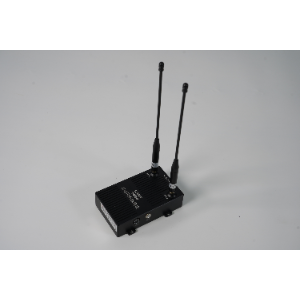
Featured product
Ad hoc airborne station
The Mesh self-organizing network aerial module device is small in size and compact in design, suitable for DJI drones M300/M50, with a transmission power of 2W. Relay in the sky, far away. This product can quickly build a reliable broadband wireless link for users in complex environments providing fast and flexible...
Products mentioned in this guide
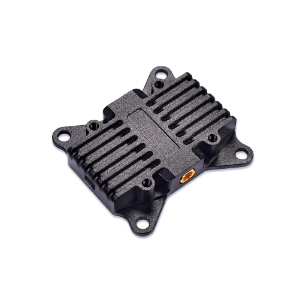
BAT 1.6W
PandaRC BAT 1.6W Video Transmission High-Power OSD Parameter Adjustment X8 Aerial Photography and Skydiving
View product details →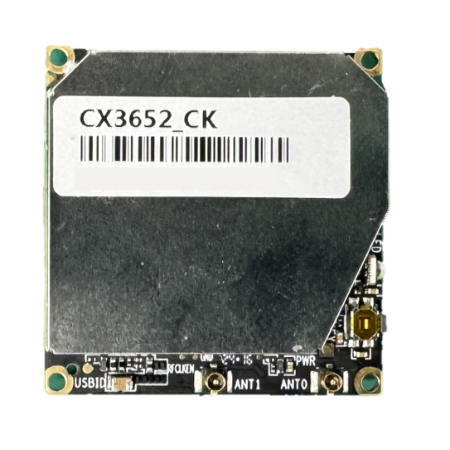
FPV Video Transmission Board
The morningcore anti-interference, low-latency, FPV digital video transmission board is developed based on the second-generation self-organizing network platform. It features...
View product details →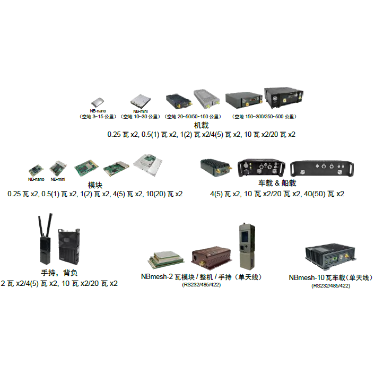
NBmesh Series of Wireless Narrowband MESH
NBmesh series narrowband mesh radio/module is suitable for distributed network scenarios where the service rate is not high, the transmission distance is long, and the...
View product details →Frequently asked questions
What is an ad hoc airborne station in practical terms?
It is a mesh self-organizing network module carried on a drone so the aircraft acts as a relay node. The ZHZS600JZ quickly builds a broadband wireless link in complex environments, carrying high-definition video, voice intercom, and IP data between users, vehicles, terminals, and relays.
Which drones does the ZHZS600JZ work with?
The manufacturer states it is suitable for DJI M300 and M50 drones. For other airframes or detailed mounting and integration requirements, contact us for the datasheet.
What is the transmission range of the ZHZS600JZ?
The available data states a transmission power of 2W but does not publish a range figure. Contact us for the datasheet, and validate range in terrain representative of your inspection routes.
Can it be used outside infrastructure inspection?
The manufacturer describes it as a fast and flexible solution for various business needs, and notes the relay device is suitable for various mobile vehicles, supporting communication between vehicles, between vehicles and terminals, and between relays. Specific use cases beyond that description should be discussed with the vendor.
How does it differ from a standard FPV video transmitter?
A standard FPV transmitter typically serves one video link, while the ZHZS600JZ is a mesh self-organizing network module that carries HD video, voice intercom, and IP data across a network of nodes. If you only need a compact video link for a custom FPV build, a board-level product such as the Morningcore FPV Video Transmission Board may be the simpler option.
Need help selecting the right system?
Tell us your mission, payload, and operating environment. Our team will help you compare options and request the right datasheets from verified suppliers.